I built the infrastructure for design at scale.
IBM Software spans thousands of designers across hundreds of products. Good design was happening everywhere — but teams had no way to see it. I identified the gap, validated it through research, and built the infrastructure to close it.
Governance isn't just rules — it's making good practice visible and repeatable. This is a direct example of identifying a systemic gap, building the evidence for it, and shipping a scalable solution that the whole organisation could use.
The story
The problem
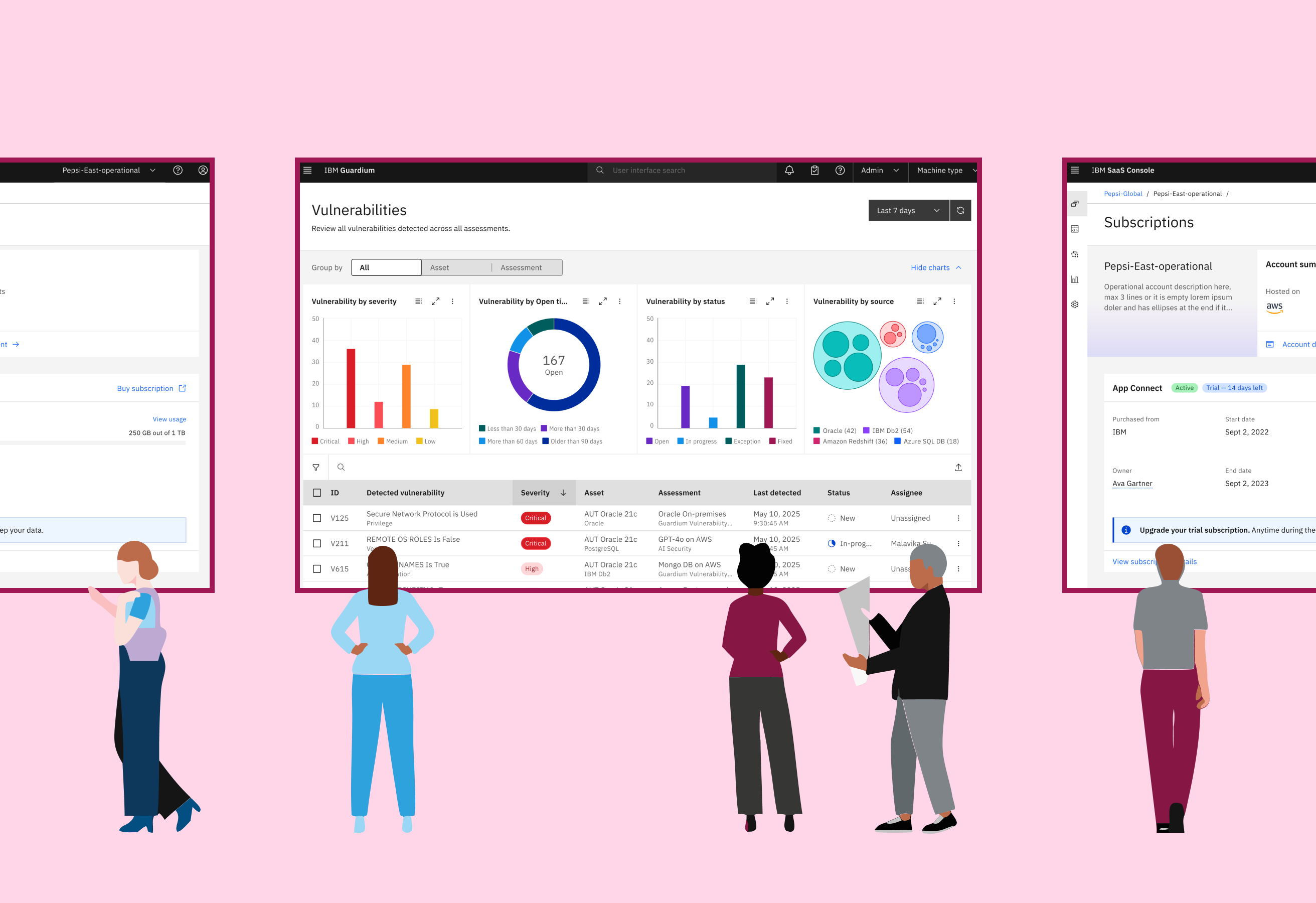
At that scale, duplication was inevitable. Teams were independently solving the same problems with no way to see what others had built. Design systems gave them the rules — but not the examples of how other products had actually put the pieces together.
The knowledge existed, spread across hundreds of product teams. It just wasn't findable — something I'd felt myself every time I tried to show a designer I was mentoring what good looked like beyond our own work.
The gallery had been wanted for years but never launched. No dedicated resource, and a contribution model that only worked if teams actually added to it — two blockers that had killed it every time before.
The research
I interviewed 19 designers across visual, UX and research specialisms, factoring in tenure — newer designers and veterans were likely to need different things.
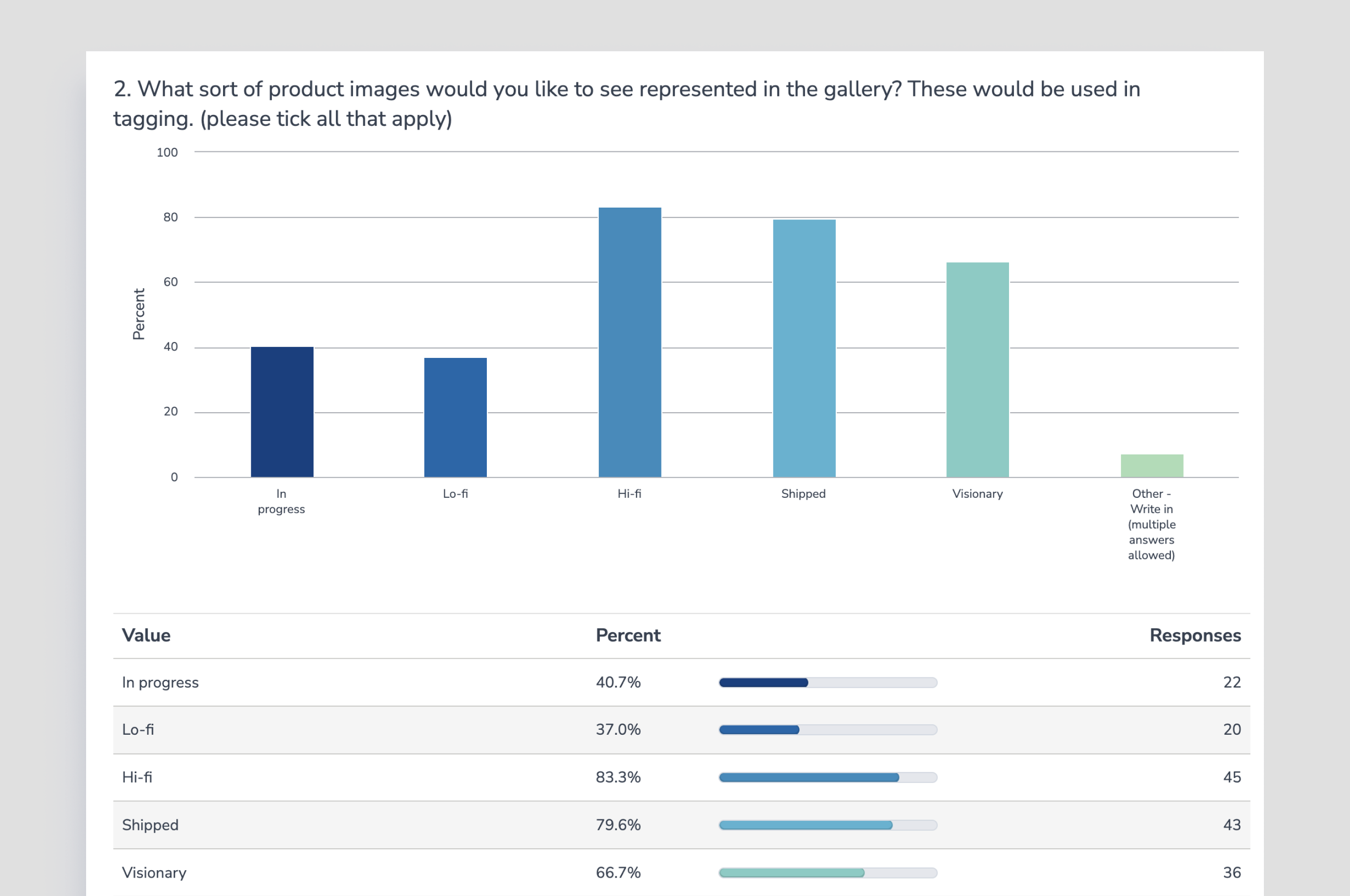
The concept was validated clearly. The most desired content was hi-fi screens, followed closely by end-to-end flows and clickable prototypes. Designers wanted to use the gallery primarily for inspiration and to reuse existing design concepts — confirming there was real demand for a shared reference, not just a nice-to-have. 11 out of 19 participants rated the concept 5/5 for value.
The solution
I led the initiative alongside another designer. With no development resource available, we explored a Figma plugin and IBM's internal site publisher — both hit blockers around dev dependency or ongoing maintenance.
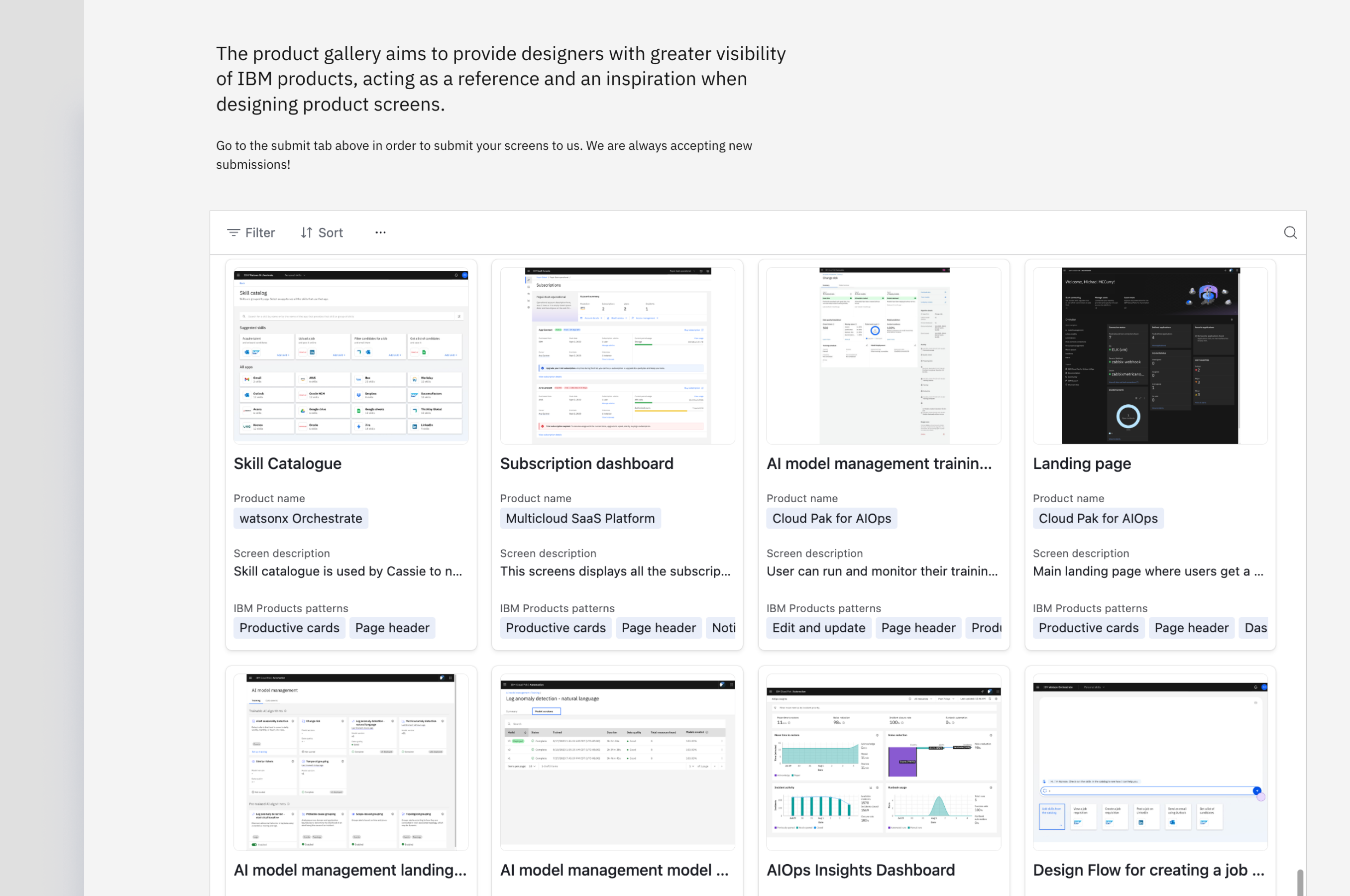
Airtable solved it. Teams submit product screens through a short form, and the gallery can be iframed directly onto the design system site — no engineering needed. Crucially, it requires no maintenance once built. That mattered: my colleague and I were essentially volunteering to make this happen. We couldn't build something we'd be on the hook to keep running indefinitely.
The impact
By surfacing exemplary designs and showing how teams use Carbon in practice, the gallery raises the baseline quality and consistency of IBM products — not through mandates, but by making the good work visible.
For designers, it reduces duplicated effort. Instead of solving the same problems from scratch, teams can reference, compare and reuse what others have already built — accelerating workflows and improving output quality.
Each submission is published with a name. For a community spread across the world, that's a way to connect with designers you'd otherwise never encounter.
“Our designers and developers have been begging for a resource like this for years. Not only will the gallery accelerate design workflows, quality and consistency — we’ll also be able to address gaps, measure usage and identify duplication of effort so much more quickly.”
Jean ServaasDesign Principal, Carbon Design System