I design products. I also use AI to ship code.
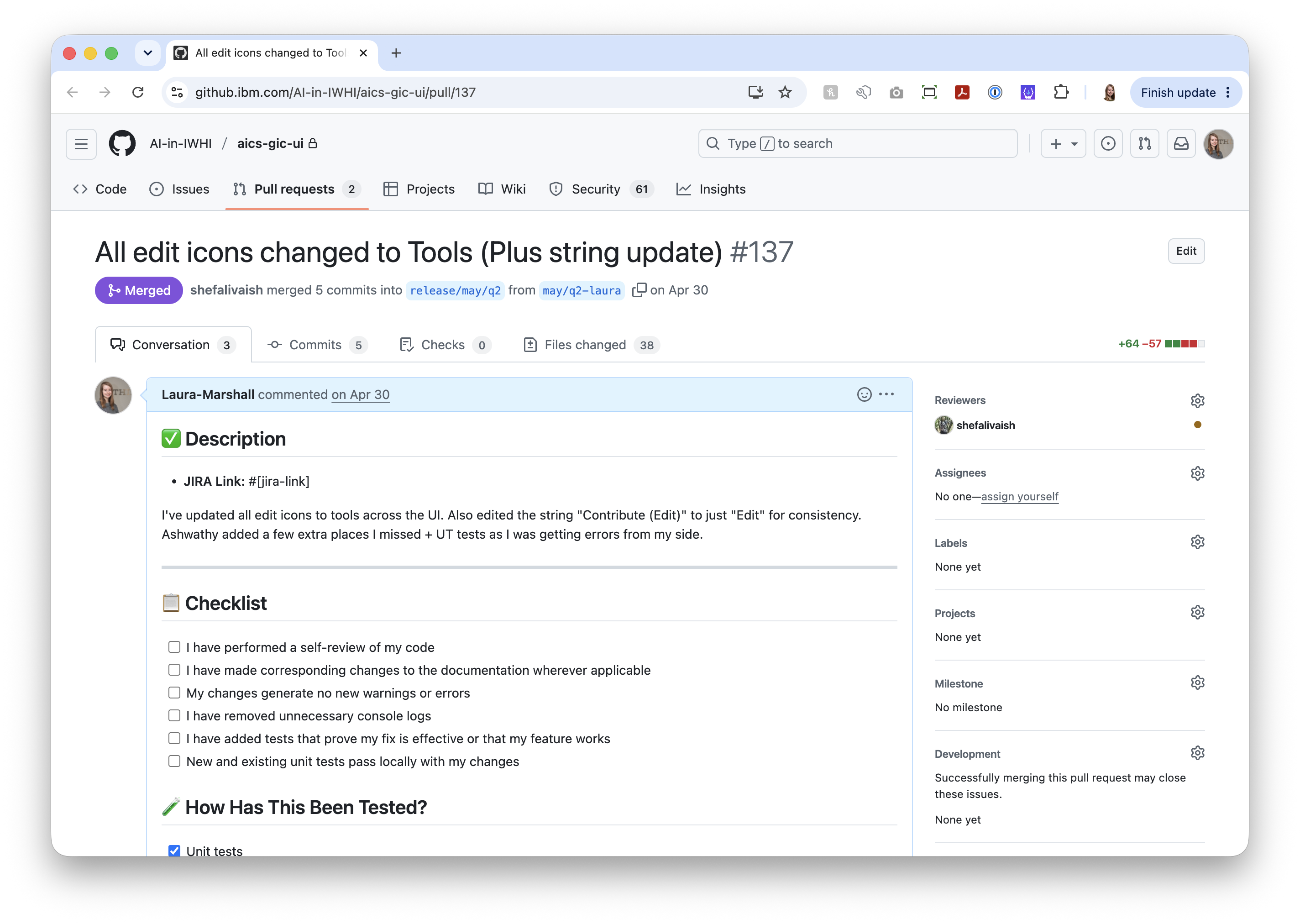
Seven years designing inside IBM product teams — across five products, from IBM MQ through to leading Asset Explorer from concept to GA. When the design-to-engineering handoff broke down, I didn't raise a ticket. I used AI to contribute the fixes directly into the codebase myself.
I've been a product designer for seven years, and I've already used AI to close the gap between design and code. That's not a talking point — it's how I work. I know where systems let teams down, because I've been on the receiving end.
The story
Asset Explorer GA
IBM webMethods Hybrid Integration spans 11 capabilities, each producing assets with value beyond their original context. But there was no unified way to discover, understand, or reuse them — valuable work stayed hidden behind capability silos and tribal knowledge.
As the sole designer, I led Asset Explorer from concept to GA — a cross-platform discovery experience for the ecosystem. I defined a realistic MVP from an ambitious vision, aligned stakeholders, made difficult prioritisation calls, and advocated for the experiences that would deliver the most value first.
Shipping code as a designer
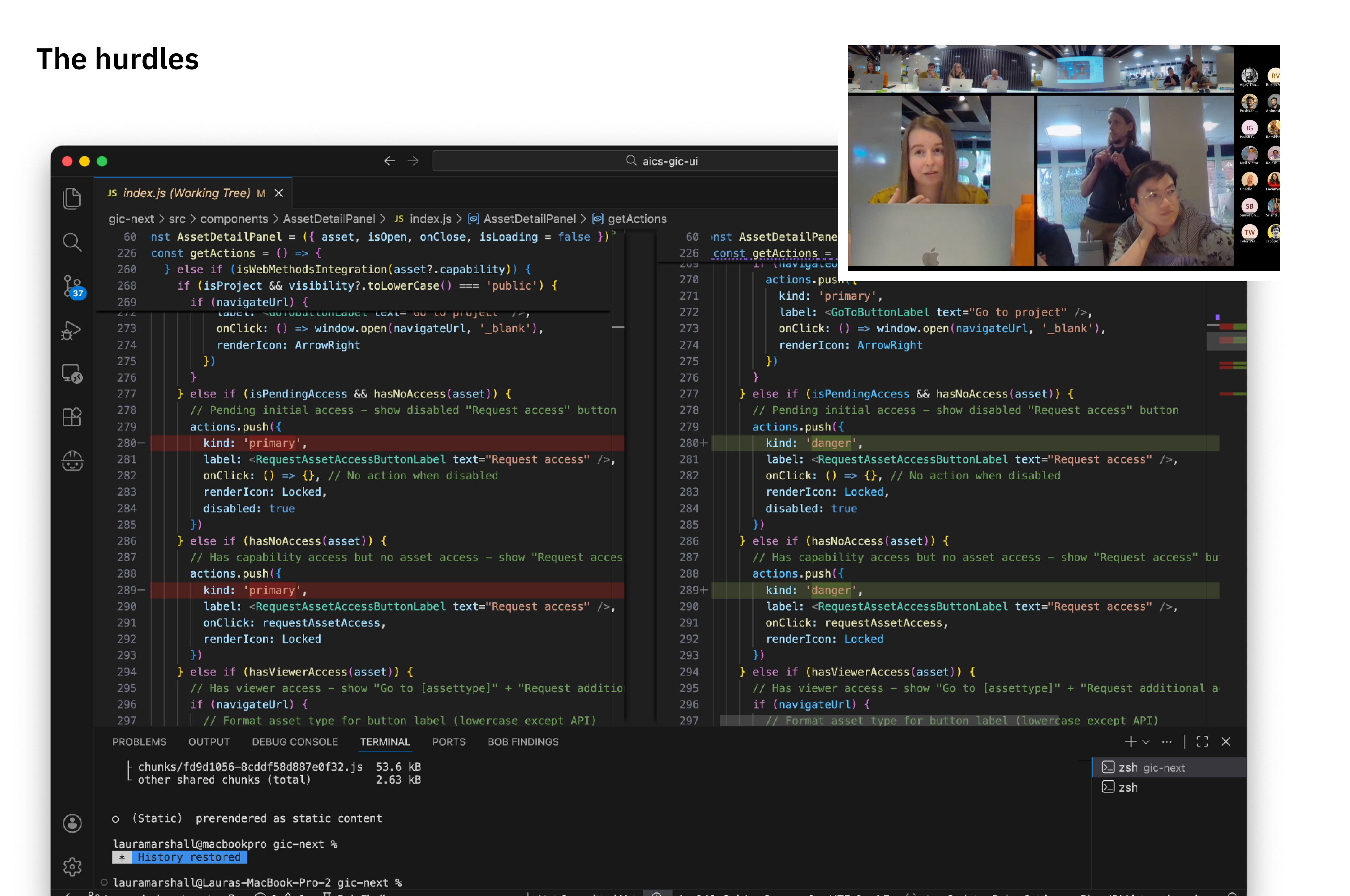
Joining a newly acquired team as the sole designer, I faced a familiar scaling problem: too many visual defects, too little time before release. Manual review and Jira workflows weren't keeping pace.
I introduced AI-assisted fixes directly within the codebase — fitting into established engineering workflows rather than disrupting them. I became the first designer in the organisation to contribute production code this way, then shared the approach across the wider design org. The result: a faster path to quality and a stronger design–engineering partnership.